Mon Valley steelmaking era
American RustThe Mon Valley steelmaking era made the river valley a center of industrial production and organized local life around mills, supporting industries, and shift work. Its collapse was not simply the loss of one employer: as steelmaking receded, jobs, public services, and routes to economic security diminished across the region. In Buell, abandoned mill buildings and struggling neighborhoods became part of the same landscape that residents remembered as crowded with workers and industry.
Industrial prominence and the mill landscape
For roughly a century, the Valley had been a center of steel production in the United States and, in the novel’s account, technically in the world. Coal from the surrounding region helped supply the industry. Steelmaking in turn supported a network of smaller businesses, including tool-and-die shops, specialty-coating operations, and mining-equipment makers. The mills were the heart of an interconnected local economy: when they shut down, the supporting industries and the towns dependent on them were affected as well.
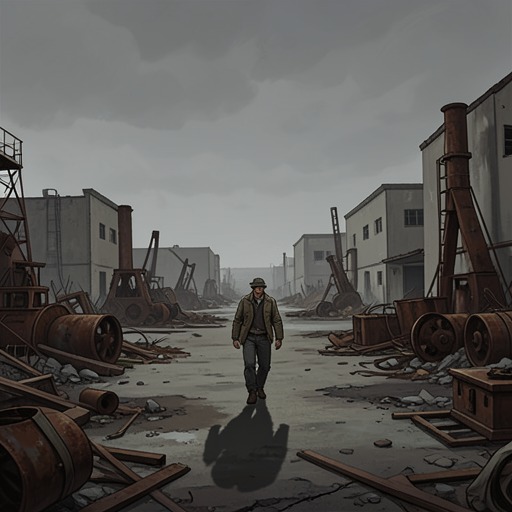
The scale of that former industry survives in the landscape. The Buell mill had been like a small city. It closed in 1987 and was partially dismantled about ten years later, but the work stopped before the site was cleared. In a later view of the grounds, long empty buildings, four remaining blast furnaces, powerhouses, slag cars, and stacks of structural steel still occupied the abandoned complex. Too much liability and too little commercial interest stood in the way of completing its dismantling. Vines and other growth covered parts of the ruins, while deer and coyotes crossed the grounds; only occasional human squatters remained.
Work, family, and remembered prosperity
For families in Buell, the steel era was remembered through its routines as much as its structures. Isaac English recalls walking with his father near the tracks at shift change, when traffic stopped and workers emerged from the mill coated in steel dust. His father, then tall and able-bodied, would lift him. The memory ends with the accident that changed his father’s life, linking the family’s recollection of industrial work to personal loss and altered dependence.
Grace Poe’s memories give the same industrial past another, more ambivalent texture. As a child, she recalls air so heavy with soot that streetlights were on in the middle of the day, and laundry that could not be hung outside without coming back dirty. At eighteen, after graduating from high school, she found a new car and a book of pay stubs waiting for her: her father expected her to begin work at Penn Steel. She spent a year on the rolling line, where she met Virgil Poe. When she became pregnant, she and Virgil married; she tried to continue her education while caring for a baby, but layoffs ended her schooling before she completed her associate degree.
Virgil survived several rounds of layoffs before losing his position. In a system where seniority increasingly determined who stayed, he had five years when the threshold had risen from ten to fifteen. His pride in the mill job was bound up with the prospect of doing better than his family had done. Afterward, retraining in robotics did not lead to the promised work, and a later job at a barge-making plant also disappeared when the plant closed. The sequence shows how retraining and individual effort could fail to replace employment lost through wider industrial change.
Closure and the narrowing of choices
The downturn reached beyond the mill gates. By the time Isaac and Billy Poe were growing up, the region had lost 150,000 jobs. Many towns could no longer afford basic services, and some had no police force. Residents faced a shrinking number of local jobs even as work elsewhere often required money, education, or a costly move. Grace’s family waited for mills to reopen, but layoffs continued and closures followed. With a young child and no jobs available, she had to abandon her studies.
The collapse also unsettled housing and household survival. After Grace and Virgil’s trailer went into foreclosure, residents began picketing sheriff’s sales, sometimes carrying deer rifles in their cars. When a banker came to press for action, protesters overturned and burned his Cadillac. A judge imposed a foreclosure moratorium to prevent people from being shot, and the suspension eventually became law. The family kept its trailer, relying on food-bank supplies and deer that Virgil poached; for two years, venison was nearly all they ate. These measures preserved a home, but they also show how community action and subsistence helped fill gaps left by disappearing wages and limited public resources.
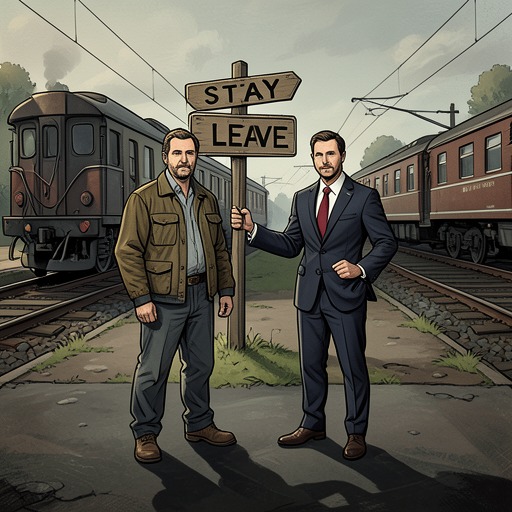
Migration offered no easy remedy. Men left for places such as Houston, New Jersey, and Virginia, sometimes sharing motel rooms and sending money home, but many returned. Grace and Virgil had no relatives elsewhere, and moving required money even as finding work was one reason to leave. The resulting bind—needing resources to relocate and employment to acquire them—helped keep families in a region with few prospects.
Ruins, public memory, and structural decline
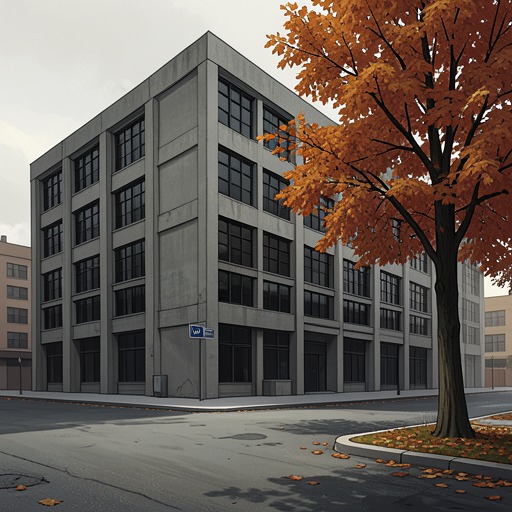
The closing of the mills turned former industrial confidence into an increasingly visible absence. Grace remembers the demolition of Dorothy Five and Six, two nearly new blast furnaces about two hundred feet tall, toppled with explosives while residents watched. Buell’s once-busy streets and mill buildings later stood amid abandoned houses and boarded downtown properties. Brownsville likewise appeared as a largely empty center of stone buildings and former offices. A new highway pointed toward Pittsburgh but carried so little traffic that its size seemed detached from the life around it.
The novel also places the region’s decline within broader choices about investment and industrial policy. Henry English reflects that Penn Steel had failed to invest in its mills for years, while German and Japanese producers had continued to modernize, including through the use of basic oxygen processes. He recalls that public argument often blamed union labor costs, but the contrast he draws centers on neglected infrastructure and a failure to invest in the plants themselves. The mills’ deterioration therefore appears not as an inevitable consequence of local workers’ shortcomings but as the result of decisions made about where capital would go.
By the time Bud Harris assesses the region, the population is growing again while incomes and municipal budgets continue to fall. Towns face serious problems without the revenue or infrastructure to address them, and local police cannot repair the economic conditions behind crime or insecurity. The steelmaking era persists in the novel as both remembered livelihood and material residue: it gave the Valley its work, its daily rhythms, and the expectation of stability, while its decline left families and towns negotiating what remained.